
Key takeaways
The GHG Protocol Corporate Standard provides requirements and guidance for creating a corporate greenhouse gas inventory. Taking the livestock business as an example, enteric fermentation of livestock owned or controlled by the operator, manure management, and on-site fuel use are generally subject to Scope 1 review, which is direct emissions. Purchased power is covered in Scope 2, and value chain activities such as feed production, external transportation, and purchased materials are covered in Scope 3. The actual classification must be determined by looking at organizational boundaries and contractual relationships.
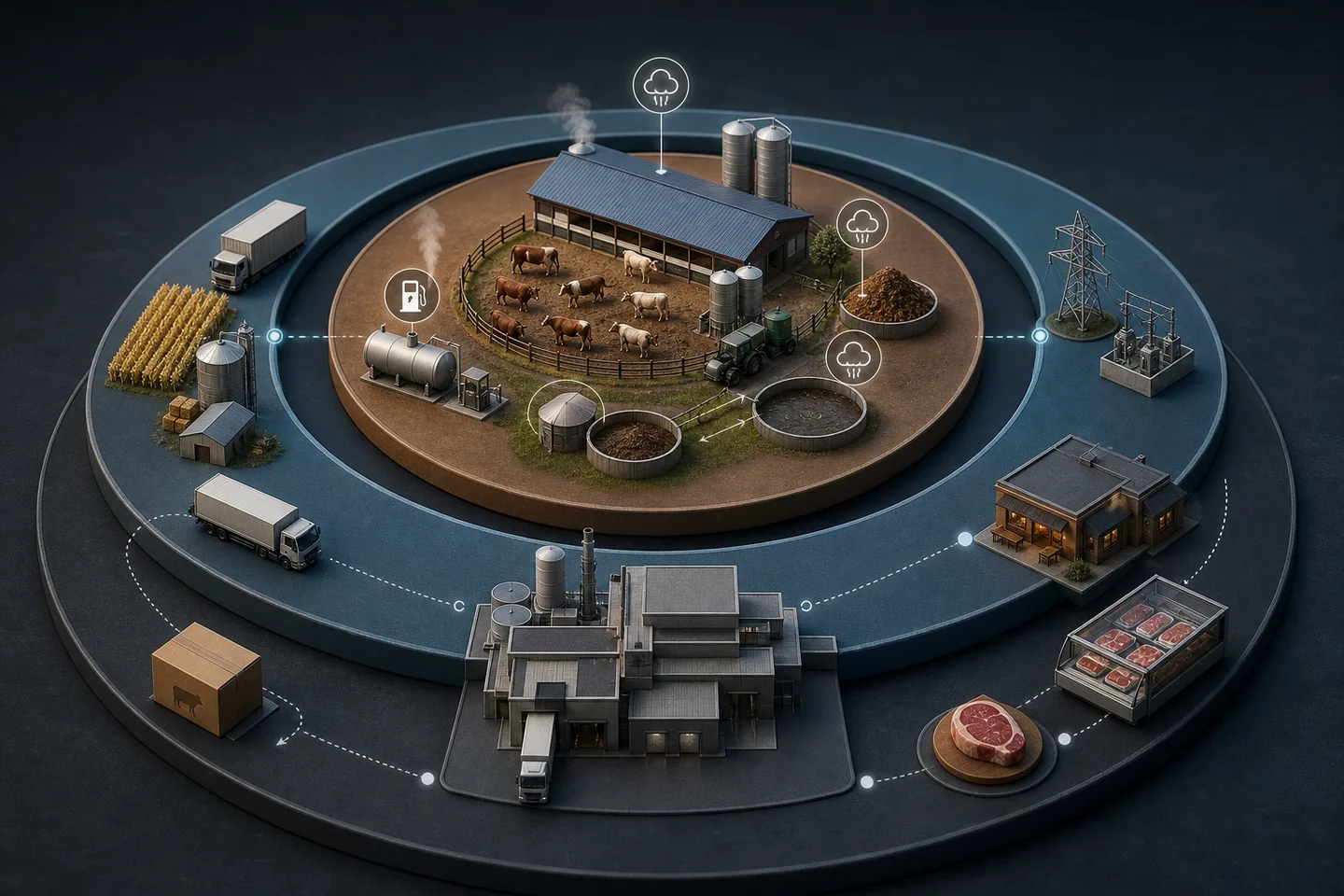
Application sequence as a hypothetical example
Let's say a livestock enterprise operates two farms. First, decide which integration method to use: the ownership ratio standard or the financial/operational control standard. Next, we collect the number of livestock, livestock characteristics, excrement disposal method, diesel and LPG usage, and power bills for each farm. Data from feed suppliers and transport companies are secured according to Scope 3 calculation purpose and importance. Verify ownership/control relationships and reporting entities to avoid double counting of the same emission source in Scope 1 and Scope 3.
Enteric fermentation methane can be estimated using activity data and appropriate emission factors or higher level methods. Sensor-based measurements can help monitor field fluctuations and abatement activities, but the methodology needs to be specified as to how they link to inventory equations. We also review our base year recalculation policy if a farm is acquired or the size of the farm changes significantly during the year.
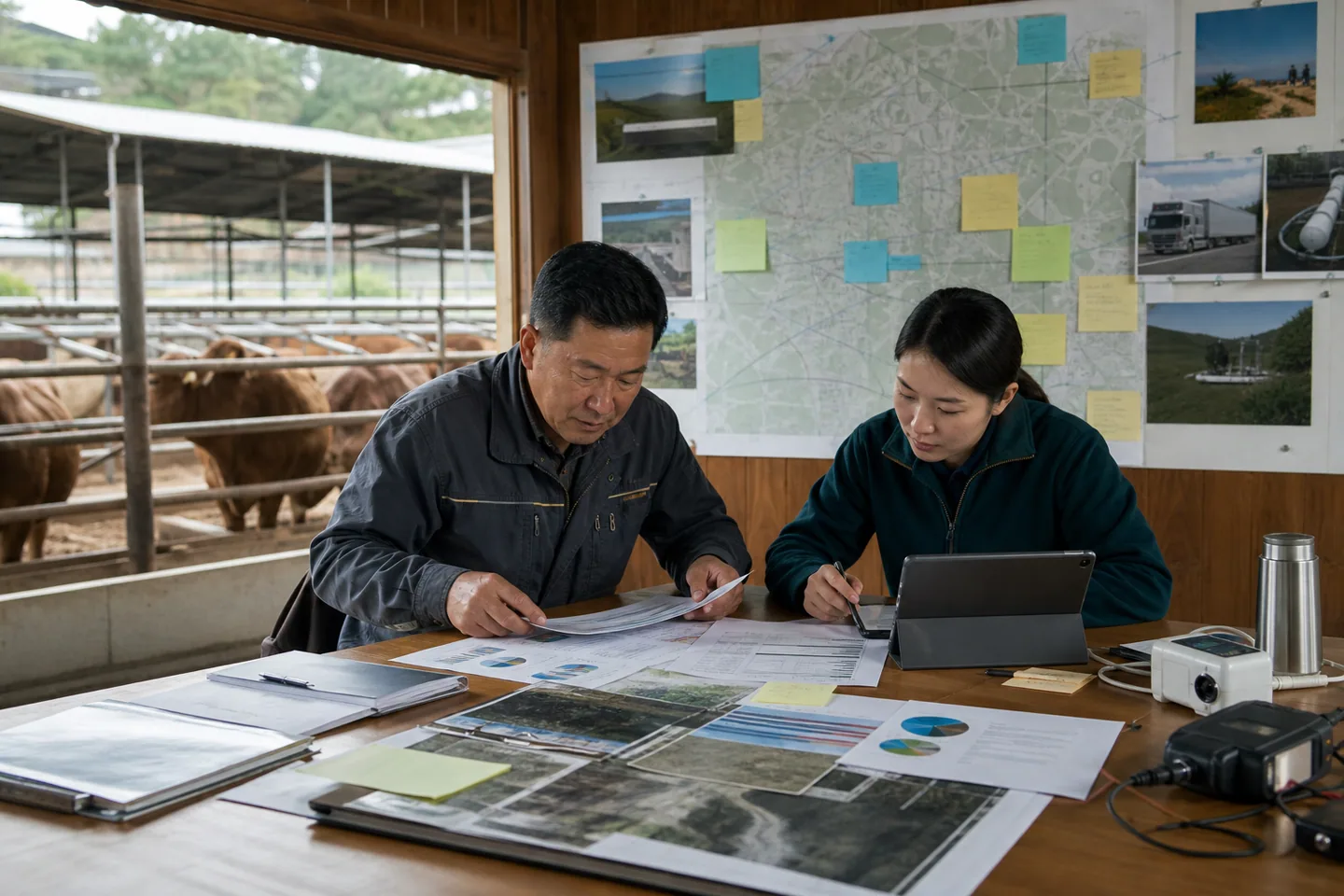
Field application checklist
First confirm the organizational integration method and the list of farms and facilities.
Scope, activity data, responsible person, and calculation method are linked to each emission source.
Review for duplicate calculations, omissions, and base year changes.
FAQ
Is it necessary to measure all feed emissions directly?
Direct on-site measurement is not necessarily possible. Choose a method that suits your purpose, including supplier data, quantity-based calculations, and appropriate emission factors, and disclose its quality and limitations.
Does this case refer to AI Safety Korea’s performance?
no. This is a hypothetical example to illustrate the application sequence and is not a result of inventory/reduction for a specific customer or farm.
Rationale and Limitations
We referenced the GHG Protocol Corporate Standard, Agricultural Guidance, and IPCC Livestock Emission Guidelines. Whether to apply the GHG Protocol and the detailed calculation method should be reviewed in accordance with the organization's boundaries, importance, and application disclosure or program requirements.