
Key takeaways
In ESG disclosure, Carbon Data does not only refer to the total emissions for one year. It must be explained which corporations and business sites were included, how Scope 1, 2, and 3 were divided, where the activity data and emission coefficients came from, and how much the estimated value was. IFRS S2 addresses greenhouse gas emissions as an important indicator in climate-related disclosures and references the GHG Protocol Corporate Standard as a common measurement basis. Jurisdictional regulations may require different measurement methods, so check the applicable standards first.

Records that should follow the published numbers
Disclosure data must be linked to the source ledger. Fit data as disparate as fuel purchases, electricity usage, transport records, feed and raw materials, and sensor observations to the same time period and organizational boundaries, and record unit conversions and emission factor versions. Manually edited values preserve the original, leaving a reason and an approver. In areas where estimates are required, such as Scope 3, it is more honest to disclose the assumptions used and the level of data quality rather than to hide the estimates themselves.
A good Carbon Data system ensures that finance, purchasing, field, and sustainability management departments use the same definitions. Establishing data owners, renewal cycles, deadlines, and review responsibilities can reduce the need to re-gather data just prior to publication. When you need to recalculate previous year's figures, you must be able to explain which boundaries or coefficients have changed to maintain comparability.
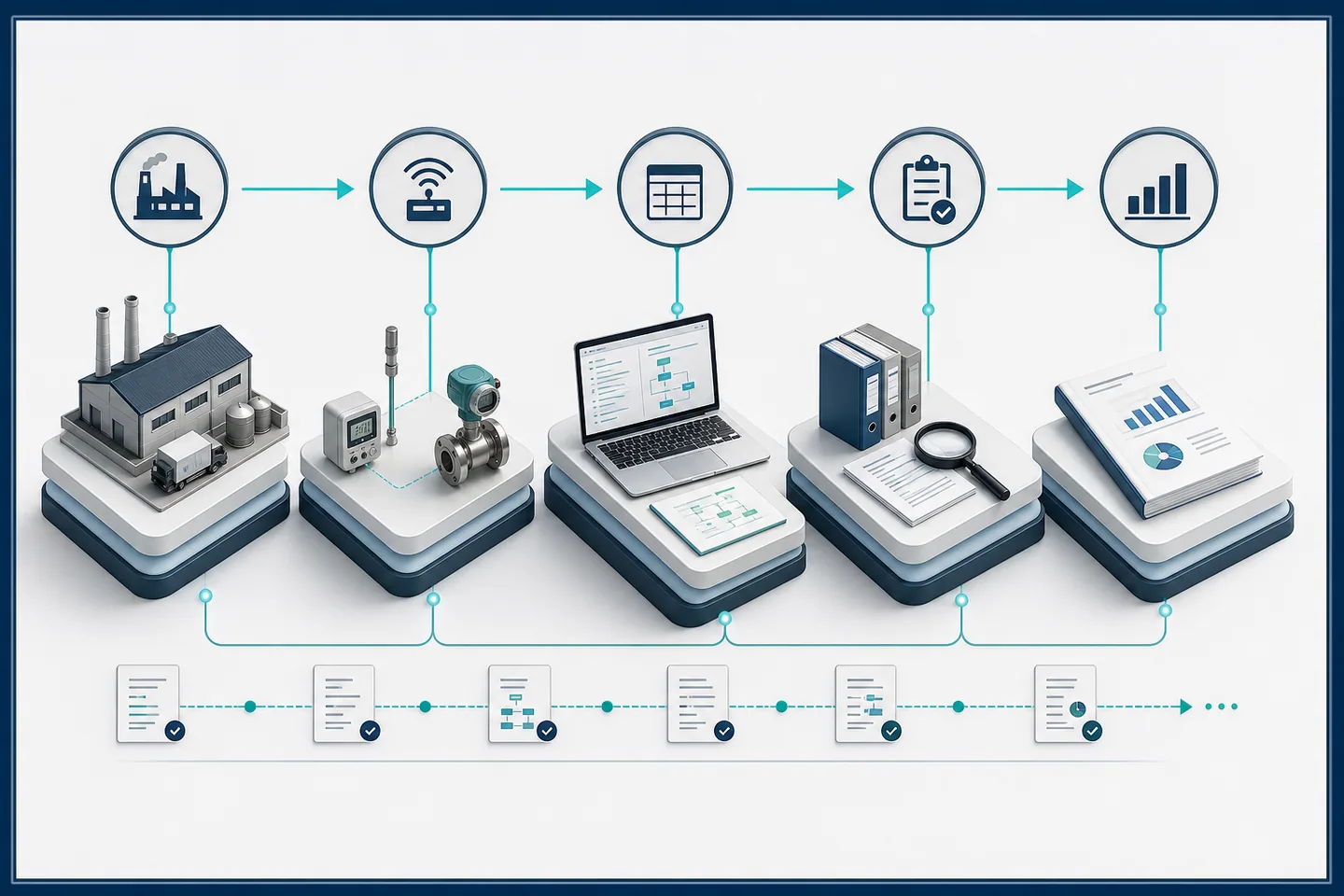
Field application checklist
The disclosure standards and organizational/reporting boundaries are first confirmed.
Link source data, units, emission factors, calculation versions, and approvers.
Estimates, missing values, and reasons for recalculation are displayed separately.
FAQ
Are public figures automatically completed if sensor data is available?
no. Sensor values can be part of activity data and must be linked to organizational boundaries, calculation methods, unit conversion, and quality review to be used as public information.
Can't I use estimated values?
In Scope 3, etc., estimates may be required. What is important is that the estimation methods, assumptions, and data limitations are transparently recorded.
Rationale and Limitations
It is organized based on the IFRS Foundation's IFRS S2 support materials and the GHG Protocol Corporate Standard. Actual disclosure obligations and permitted methods may vary depending on applicable country, exchange, and industry regulations. This article is general data management guidance and is not a substitute for legal, accounting, or verification advice.