
Key takeaways
AI Safety Korea Co., Ltd.'s starting point for research and development is its field experience in handling gas accurately and safely. According to the scope of user verification, the CEO worked for 27 years in the gas detector-related business of a global company. The registered patents 10-2990446 and 10-2990447 provided to the company show the technical direction of livestock methane monitoring and comparison before and after application. The research and development challenge does not stop with installing devices, but rather recording field conditions, managing data quality, and creating analysis flows that can be reviewed by humans.
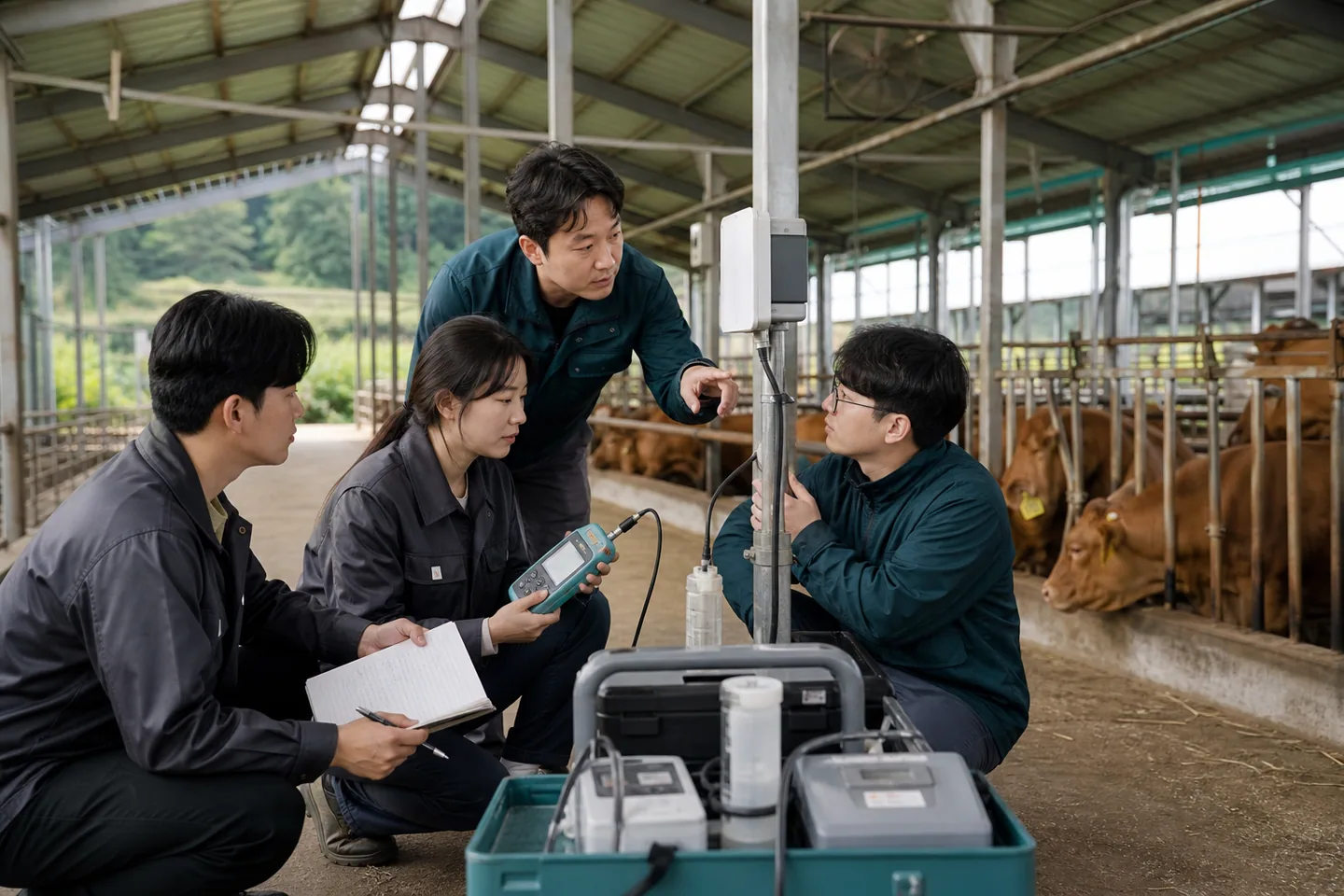
From gas detection experience to data system
Industrial gas detection combines measurement range and response, calibration, installation location, maintenance and alarm response. Barn methane data requires the same basics. Here, operational context such as temperature, humidity, ventilation, feeding, cleaning, and number of animals is added. R&D is a process that sequentially links sensor selection, installation design, continuous acquisition, quality rules, baseline comparison, AI anomaly candidate detection, and operator review.
Unexpected variables emerge in the field. Communications may be lost, devices may become contaminated, and operating schedules may change. The next installation and analysis will be better only if these problems are not hidden and the causes and improvement results are recorded. Collaboration with farms, universities and device development and production partners is the basis for dividing roles and examining methods. Agreements and patents are the basis for technological direction and do not guarantee a specific reduction rate or business success.
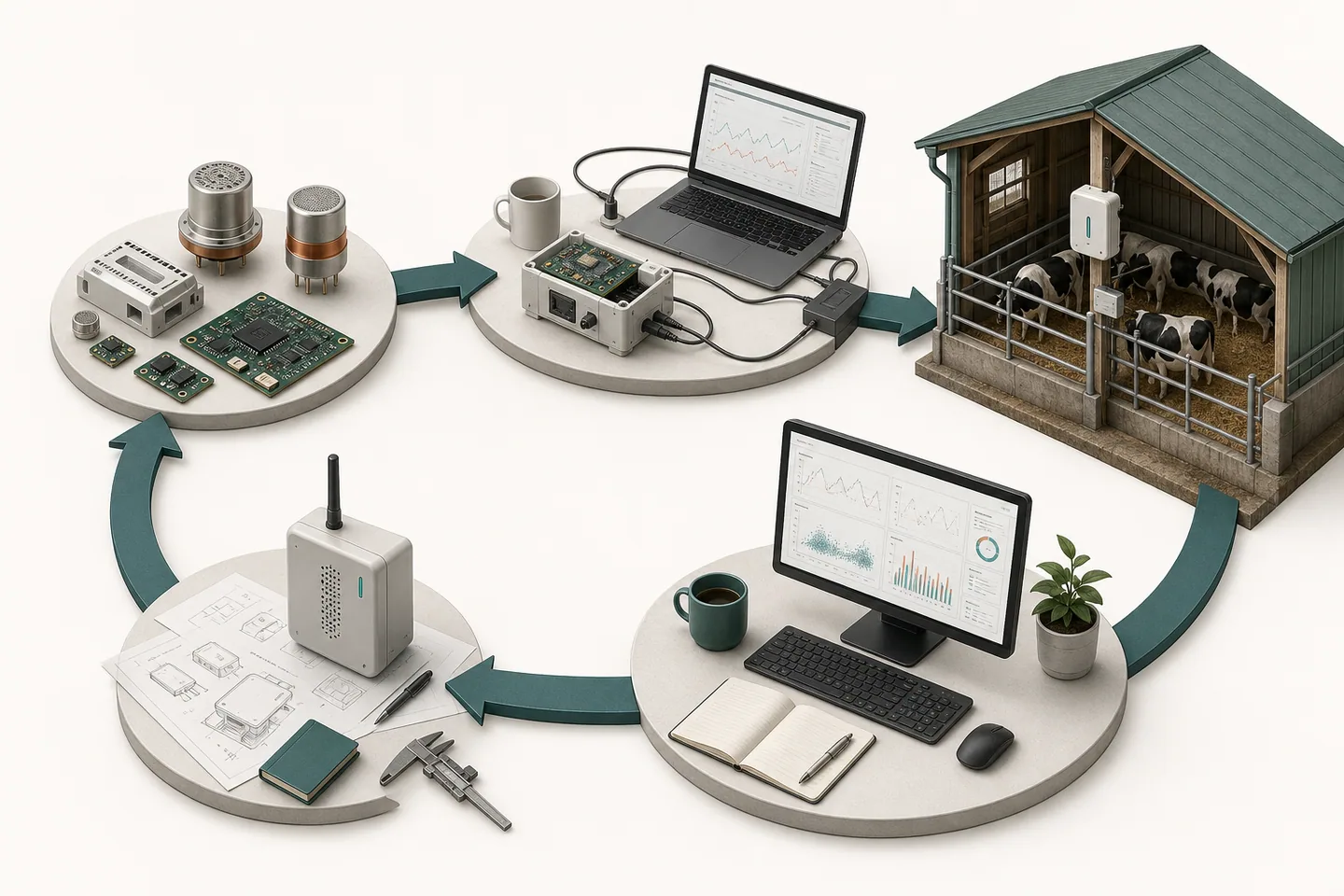
Principles followed in current research and development
First define the measurement purpose and site boundaries, then select the devices and analysis.
Record good results as well as omissions, errors, corrections and uncertainties.
AI is used as a judgment aid and goes through human review of facts and authority before disclosure.
FAQ
Is there currently a confirmed reduction rate?
This article does not disclose confirmed reduction rates for specific farms. Only results for which measurement boundaries and duration, data quality, comparison conditions and public approval have been confirmed can be treated as separate cases.
Are the generated images photos of actual research sites?
no. This is a generated image for conceptual explanation to understand the flow of research and development, and is not a photo that reproduces actual employees, equipment configuration, or performance.
Rationale and Limitations
It was prepared based on representative experience, registered patent data, product catalogs, and field cooperation data provided to the company and approved for public use. It does not include detailed performance, customer information, farm-specific data and business performance that have not been made public. Research and development status and disclosure scope will be updated as new official data is confirmed.