
Key takeaways
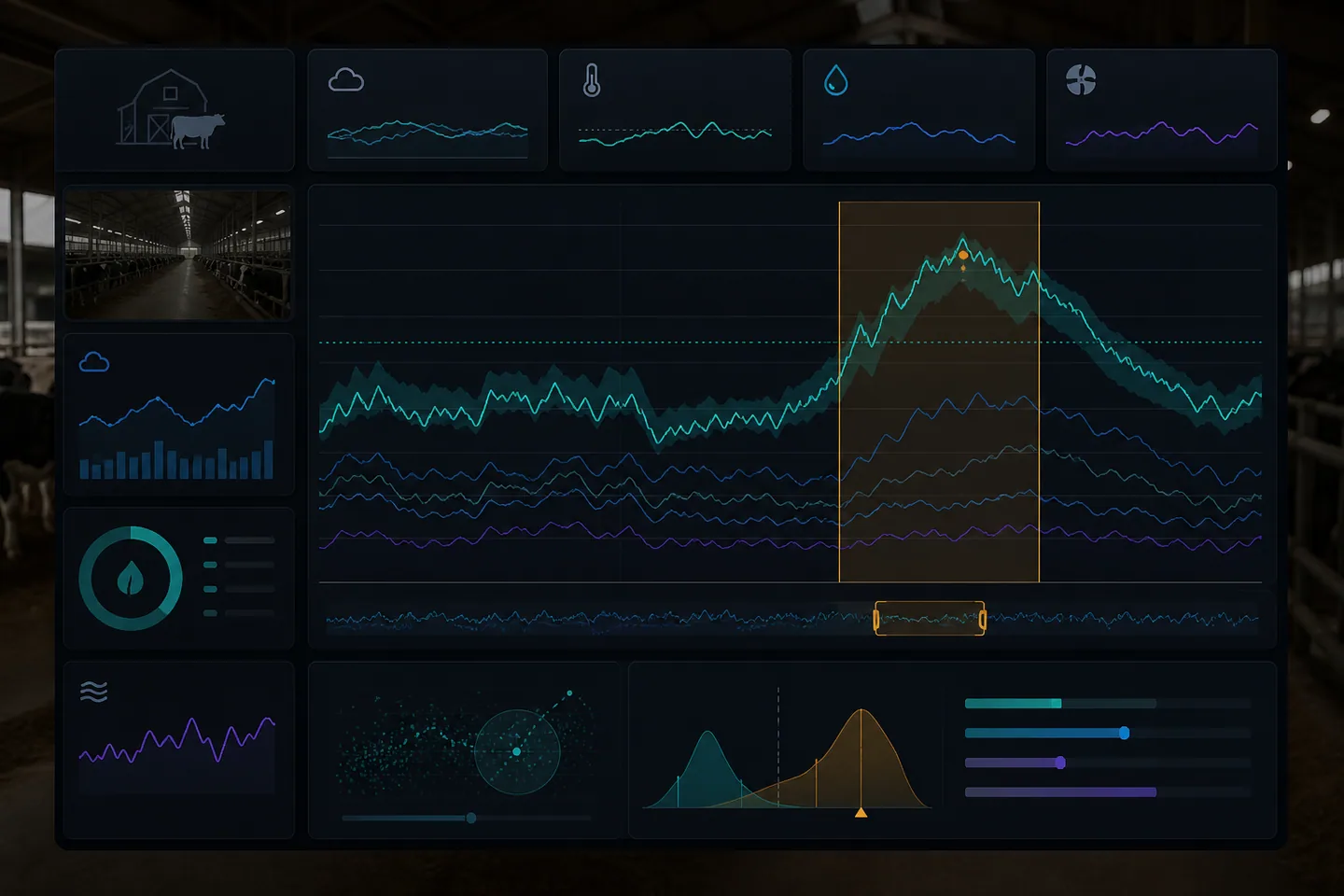
AI anomaly detection is a technology that finds sections that deviate from the normal range and reduces the number of objects that humans see first. In livestock sensor data, sudden changes in concentration, repetition of the same value for a long time, long-term drift, communication breakdown, and patterns that do not match temperature, humidity, and ventilation can be displayed as candidates. The occurrence of an alarm does not confirm a gas leak or abatement failure. Real-world phenomena, sensor failures, maintenance, and operational changes can produce similar signals.
Why use rules and models together?
Rule-based checking is effective for problems that are easy to explain, such as out-of-range, rate-of-change, fixed values, and missingness. When normal patterns vary depending on time of day, season, and rearing conditions, statistical models or machine learning help find complex changes. Initially, it is easy to identify false alarms and omissions by using the rule as a baseline and comparing the additional intervals that the model finds.
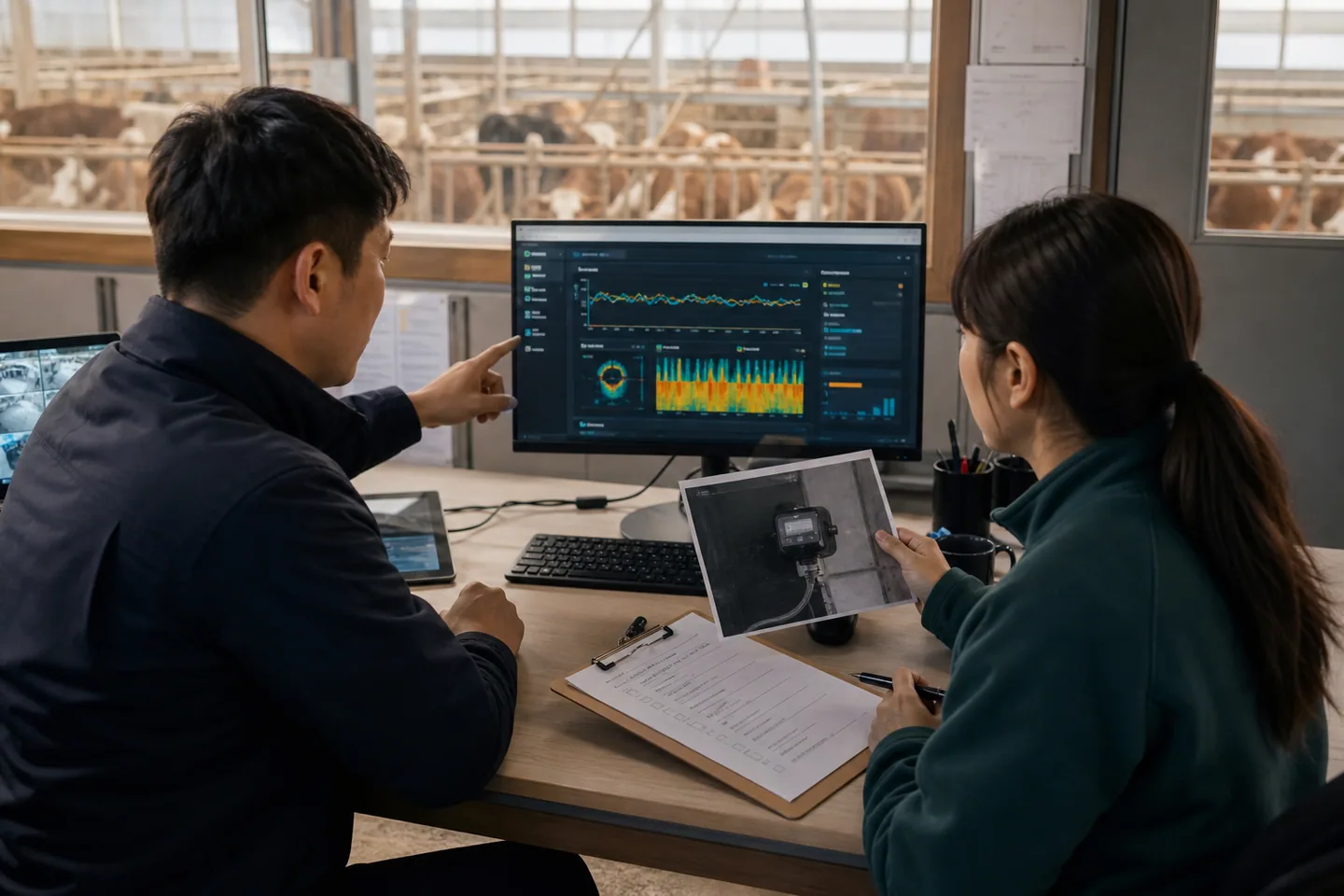
Model inputs may require events such as temperature, humidity, ventilation, device status, feeding and cleaning, as well as concentration. As training periods and field conditions change, the definition of normal changes, so we manage model versions and thresholds. Operators check alarms with field logs and calibration records and leave judgment results. Confirmed cases will be used in the next model evaluation, but historical data should not be modified after the fact to make the results look good.
Field application checklist
First define the abnormality type, response procedures, and alert person.
Preserve versions of rules, models, thresholds, and training data.
False alarms, non-detection results, and operator judgment results are regularly evaluated.
FAQ
Is the system better with more AI alerts?
no. Too many alerts can cause you to miss important signals. False alarms and non-detection should be evaluated together and adjusted to a level that can be responded to.
Can I use unlabeled data?
Unsupervised methods can find candidates, but they do not tell us the cause of an anomaly. On-site review and subsequent labeling are required.
Rationale and Limitations
We referenced US EPA's recommendations for automated data checking and manual verification and NIST's Trustworthy AI Principles. This article explains technical concepts and does not make claims about the performance or field diagnostic accuracy of any particular model.